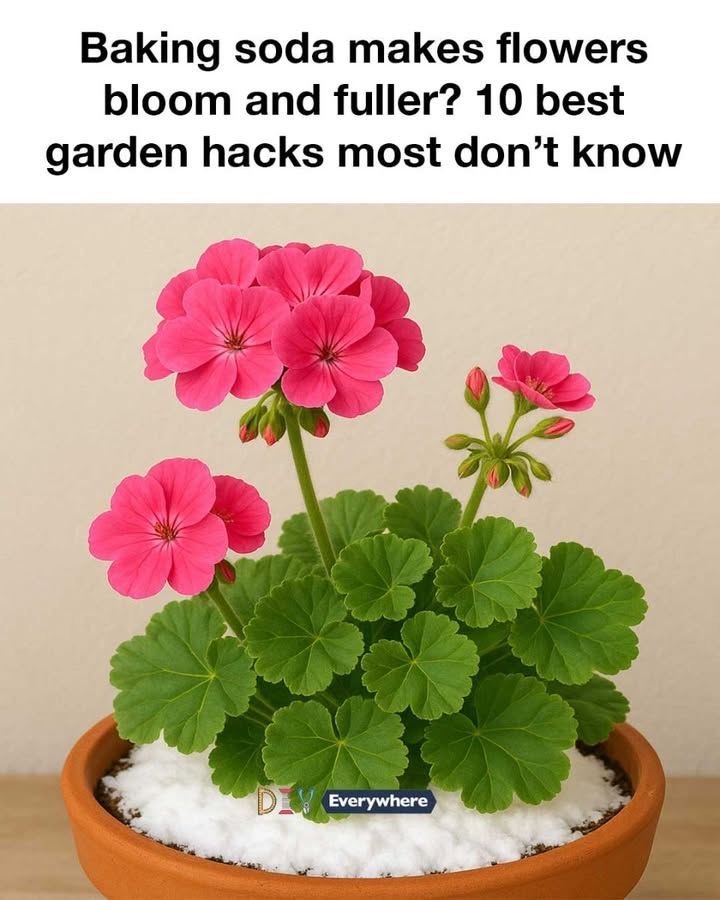
Gardening is both an art and a science, requiring a delicate balance of knowledge, patience, and creativity. While many gardeners rely on commercial fertilizers and pesticides, there are numerous natural alternatives that can enhance plant growth and health. These hacks not only save money but also promote a more sustainable approach to gardening.
In this article, we will explore ten of the best garden hacks that most people don’t know about. From using common household items like baking soda and vinegar to more unconventional methods like aspirin and milk, these tips will help you cultivate a thriving garden with lush blooms and vibrant foliage.
1. The Magic of Baking Soda for Blooms
Baking soda, or sodium bicarbonate, is a versatile household item that can also work wonders in the garden. It helps to increase the pH level of the soil, making it less acidic, which is beneficial for certain flowering plants like geraniums, begonias, and hydrangeas. To use baking soda for your flowers, dissolve one tablespoon of baking soda in a gallon of water and apply it to the soil around your plants once a month. This solution can help promote fuller blooms and healthier plants.
Additionally, baking soda can be used as a natural fungicide. By mixing one teaspoon of baking soda with a quart of water and a few drops of dish soap, you can create a spray that helps prevent fungal diseases like powdery mildew and black spot on roses.
2. Epsom Salt for Greener Leaves
Epsom salt, or magnesium sulfate, is a well-known remedy for promoting greener leaves and healthier plants. Magnesium is a crucial component of chlorophyll, the compound that gives plants their green color and is essential for photosynthesis. To use Epsom salt in your garden, dissolve two tablespoons in a gallon of water and spray it on the foliage of your plants every two weeks. This application can help correct magnesium deficiencies and improve overall plant health.
For tomato and pepper plants, which are particularly prone to magnesium deficiency, you can also sprinkle a tablespoon of Epsom salt around the base of each plant every month to encourage robust growth and fruit production.
3. Coffee Grounds to Enrich the Soil
Used coffee grounds are an excellent addition to your garden soil, as they are rich in nitrogen, a vital nutrient for plant growth. They also improve soil structure and drainage. To use coffee grounds, simply sprinkle them around the base of your plants or mix them into your compost pile. Be sure to use them in moderation, as too much can lead to overly acidic soil.
Coffee grounds can also deter pests like slugs and snails. Create a barrier by spreading a thin layer of coffee grounds around vulnerable plants. The abrasive texture and caffeine content can help keep these pests at bay.