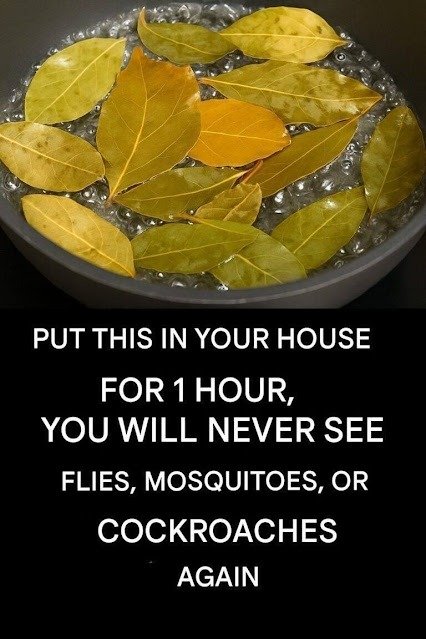
You’ve probably seen viral posts claiming that boiling certain leaves (like bay leaves, neem, basil, or eucalyptus) will magically repel or eliminate flies, mosquitoes, and cockroaches—creating a natural, chemical-free zone of pest-free peace.
While the idea is appealing (who wouldn’t want a safe, plant-based solution?), the reality is more nuanced—and far less dramatic. Let’s separate folk wisdom from scientific fact so you can protect your home effectively.
🌿 What Does Work (Mildly and Temporarily)
Some aromatic plants do contain compounds that insects find unpleasant. When fresh or essential oils are used strategically, they can offer short-term, localized repellency:
Bay leaves: Contain eugenol and cineole—known to mildly repel weevils and moths.
→ But they won’t stop cockroaches or flies in an infested kitchen.
Neem leaves: Contain azadirachtin—a natural insect growth regulator.
→ Effective in agricultural sprays, but boiling leaves releases minimal active compounds.
Basil, mint, or lemongrass: Strong scents may deter mosquitoes briefly near windows.
→ Not a replacement for EPA-approved repellents like DEET or picaridin.
Boiling these leaves releases some volatile oils into the air—but the concentration is too low and short-lived to meaningfully impact pests beyond a few feet, and only while the steam is active.
🚫 Myth: Boiling = “fumigation” that kills or drives out all insects.
✅ Truth: At best, you get a gentle, temporary scent barrier—not eradication.
🪰 Why Boiling Leaves Won’t Solve a Pest Problem
Cockroaches hide in walls, cracks, and drains—they won’t flee because of kitchen steam.
Mosquitoes are drawn to CO₂ and body heat—not easily fooled by herbal vapors.
Flies breed in organic waste (trash, drains, pet waste)—remove the source, or they’ll return.
Boiled leaf water lacks potency: Active compounds degrade with heat or dilute too much.
🔬 Science says: No peer-reviewed study shows that boiling leaves eliminates household infestations. At best, essential oil diffusers may reduce mosquito landings by 20–40%—far less than proven repellents.
✅ What Actually Works for Natural Pest Control
continued on next page