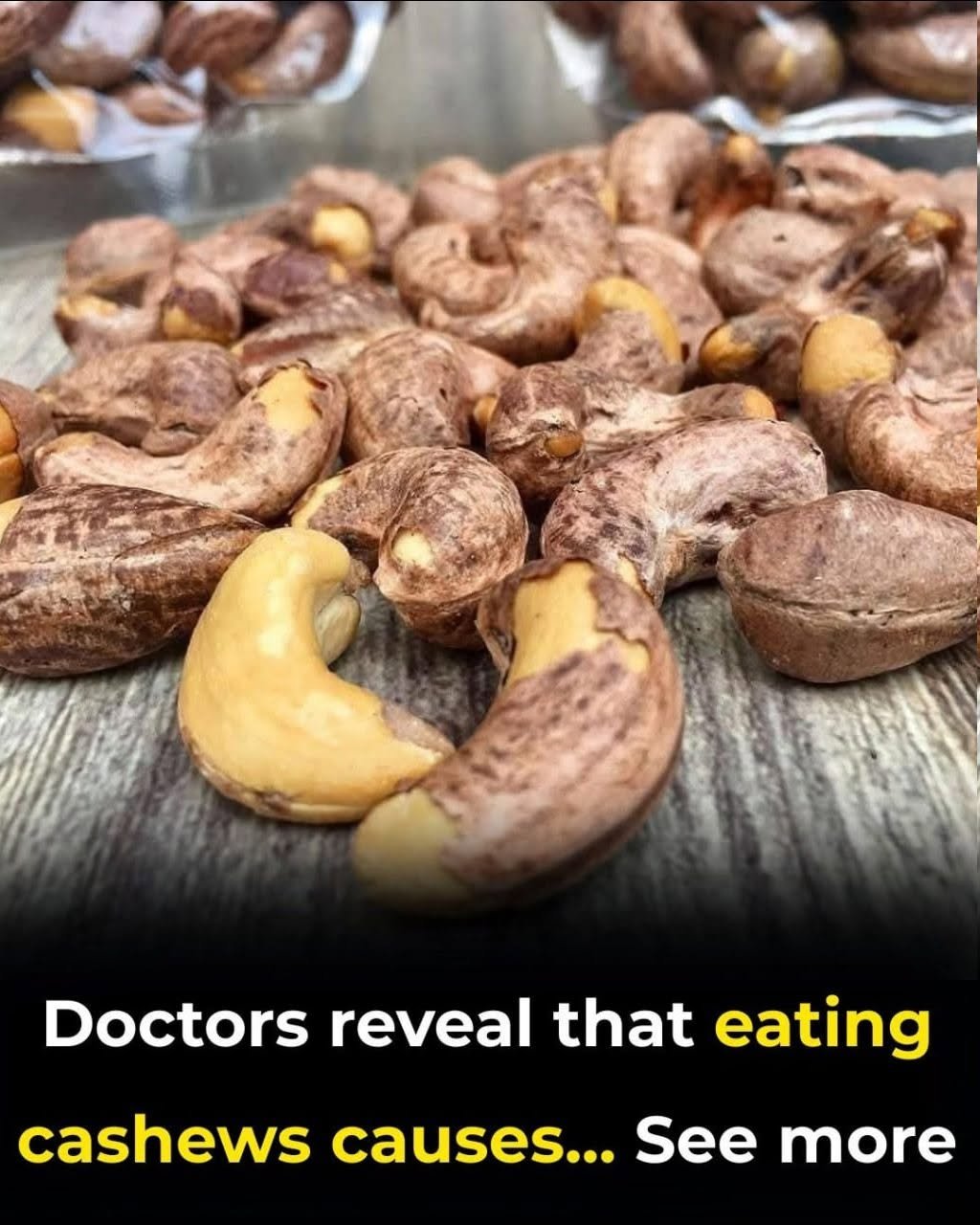
They’re creamy, satisfying, and easy to snack on by the handful. But cashews aren’t just delicious—they’re a genuine nutritional powerhouse. When eaten regularly in the right portions, doctors and nutrition experts say cashews can spark meaningful changes in your heart, metabolism, brain, and overall health.
Here’s what actually happens to your body when you make cashews a regular part of your diet.
First, What’s in a Cashew?
One ounce of cashews (about 18 nuts, or a small handful) contains:
| Nutrient | Amount | % Daily Value |
|---|---|---|
| Calories | 160-170 | — |
| Total fat | 13g | 20% |
| Protein | 4-5g | 9-10% |
| Carbohydrates | 9-10g | 3% |
| Fiber | <1g | 3% |
| Copper | 0.6mg | 67% |
| Magnesium | 73mg | 17% |
| Manganese | 0.2mg | 9% |
| Phosphorus | 139mg | 11% |
| Zinc | 1.6mg | 14% |
| Iron | 1.7mg | 9% |
| Vitamin K | 9.8mcg | 8% |
Key takeaway: Cashews are particularly rich in copper (nearly 70% of your daily needs in one serving), magnesium, and healthy monounsaturated fats .
What Happens to Your Heart
1. Cholesterol Levels May Improve
Despite having slightly more saturated fat than almonds or pistachios, most of the fat in cashews is heart-healthy monounsaturated and polyunsaturated fats .
The research: A 2017 study found that people who ate cashews instead of potato chips had lower total and LDL (“bad”) cholesterol levels . A 2020 meta-analysis also suggested that cashew consumption may reduce triglycerides .
What doctors say: “Cashews can definitely be part of a heart-healthy nutrition pattern when eaten in the right portions,” says Grace A. Derocha, RD, a spokesperson for the Academy of Nutrition and Dietetics .
2. Blood Pressure May Drop
Cashews provide magnesium and potassium—two minerals that help keep blood vessels flexible and support healthy blood pressure .
The research: A 2020 meta-analysis concluded that cashew consumption reduced blood pressure . While the evidence is modest, it “skews positively,” according to Derocha .
3. Antioxidants Protect Your Arteries
Cashews contain abundant antioxidants that fight oxidative stress—a key factor in atherosclerosis (hardening of the arteries) that leads to heart disease .
What Happens to Your Metabolism
see continuation on next page
What Happens to Your Metabolism
4. Blood Sugar May Stabilize
For people with type 2 diabetes or insulin resistance, cashews may offer real benefits.
The research: A study in people with type 2 diabetes found that those who got 10% of their calories from cashews for eight weeks had healthier insulin levels than those who didn’t . Other research has pointed to long-term regular nut consumption as helpful in preventing type 2 diabetes .
5. Weight Management May Become Easier
This seems counterintuitive—cashews are calorie-dense, after all. But research consistently shows that nut consumption is associated with healthier body weight, not weight gain .
Why:
-
Protein and fiber increase satiety (you feel fuller longer)
-
Some calories may not be fully absorbed—studies have found undigested fat from cashews in participants’ stool
-
Replacing processed snacks with nuts reduces overall calorie intake
The research: A 2022 study found that people who ate a handful of nuts daily, including cashews, had a lower risk of cardiovascular disease . Swapping a high-carb snack for cashews appears to support weight management .
What Happens to Your Brain and Nerves
6. Brain Health May Get a Boost
The unsaturated fats in cashews help improve brain health and may play a role in improving memory. Cashews also contain B vitamins and antioxidants that help protect nerves .
7. Joint Protection
Research suggests cashews may help joint health. Eating nuts like cashews is associated with less inflammation—the swelling that’s a common, painful symptom of arthritis .
What Else Cashews Do
8. Gut Health Improves
The fiber and polyphenols in cashews aid digestion and promote gut immunity .
9. Skin and Hair Benefit
B vitamins, vitamin E, protein, and antioxidants nourish skin and hair from within .
10. Oxidative Stress Decreases
Oxidative stress has been linked with inflammation and various chronic conditions, including allergies, metabolic syndrome, and cardiovascular diseases. Cashews help lower oxidative stress and may play a protective role against these conditions .
How Many Cashews Should You Eat?
The recommended serving: About 1 ounce per day—roughly 15-20 cashews, or a small handful .
Tips for portion control:
-
Buy individual 1-ounce snack packs
-
Use a small bowl instead of eating from the bag
-
Pair with fruit for a balanced snack
Who Should Be Cautious?
1. People with Nut Allergies
Cashew allergy is one of the most common tree nut allergies. If you have a history of tree nut allergies, avoid cashews .
2. People Prone to Kidney Stones
Cashews contain oxalates, which can contribute to calcium-oxalate kidney stones in susceptible individuals. If you have a history of stones, moderate your intake—stick to the recommended serving size .
3. People with IBS
The high FODMAP content in cashews can trigger symptoms such as bloating, gas, and diarrhea in some individuals with irritable bowel syndrome. Start with small amounts .
4. People on Certain Medications
Cashews may interact with:
-
Blood thinners (due to vitamin K content)
-
Blood pressure medications (due to potassium)
-
Diabetes medications (may affect blood sugar)
Always consult your doctor if you’re on medication before making significant dietary changes.
5. Anyone Watching Sodium Intake
Choose unsalted cashews to limit sodium. One ounce of roasted, salted cashews has 181 mg of sodium . Unsalted versions have 0 mg.
Raw vs. Roasted: Which Is Better?
see continuation on next page
Raw vs. Roasted: Which Is Better?
| Type | Pros | Cons |
|---|---|---|
| Raw | No added oils or salt | Less flavorful to some |
| Dry-roasted (unsalted) | Enhanced flavor, no added salt | Still roasted (minimal difference nutritionally) |
| Oil-roasted | Very flavorful | Adds calories from oil |
| Honey-roasted | Delicious | Adds significant sugar |
Important safety note: Raw cashews with shells contain urushiol—the same toxic oil found in poison ivy. The cashews you buy at the store have been steamed to remove this compound, making them safe to eat .
Healthiest choice: Raw or dry-roasted unsalted cashews.
Delicious Ways to Add Cashews to Your Diet
-
Handful as a snack – Simple and satisfying
-
On salads – Adds crunch and nutrition
-
In stir-fries – Cashews are traditional in many Asian dishes
-
Cashew butter – Spread on toast or apple slices
-
Cashew milk – A dairy-free alternative with fewer calories than cow’s milk
-
In homemade trail mix – With dried fruit and dark chocolate
-
Blended into sauces – Soaked cashews create creamy dairy-free sauces
-
As a crust for fish or chicken – Crushed cashews add flavor and texture
The Bottom Line
Doctors reveal that eating cashews regularly can:
-
Improve cholesterol levels and support heart health
-
Help manage blood pressure
-
Stabilize blood sugar and improve insulin sensitivity
-
Support healthy weight management when replacing less healthy snacks
-
Protect joints by reducing inflammation
-
Nourish skin, hair, and brain
It’s not a miracle food—but as part of a balanced, whole-foods diet, cashews are one of the most nutrient-dense, health-promoting nuts you can eat.
A handful a day might just be one of the simplest, most delicious things you can do for your long-term health.