Store-Bought vs. Farm-Raised Beef: Understanding the Difference
Ground beef is one of the most versatile ingredients in any kitchen. From hearty burgers and tender meatballs to rich sauces and comforting casseroles, it’s a staple that finds its way into countless meals. But not all ground beef is the same. The two portions shown side by side tell a story of texture, processing, and quality—differences that can significantly impact your cooking results. Understanding these distinctions helps you choose the right meat for your recipes and make more informed decisions about what lands on your family’s table.
A Tale of Two Textures
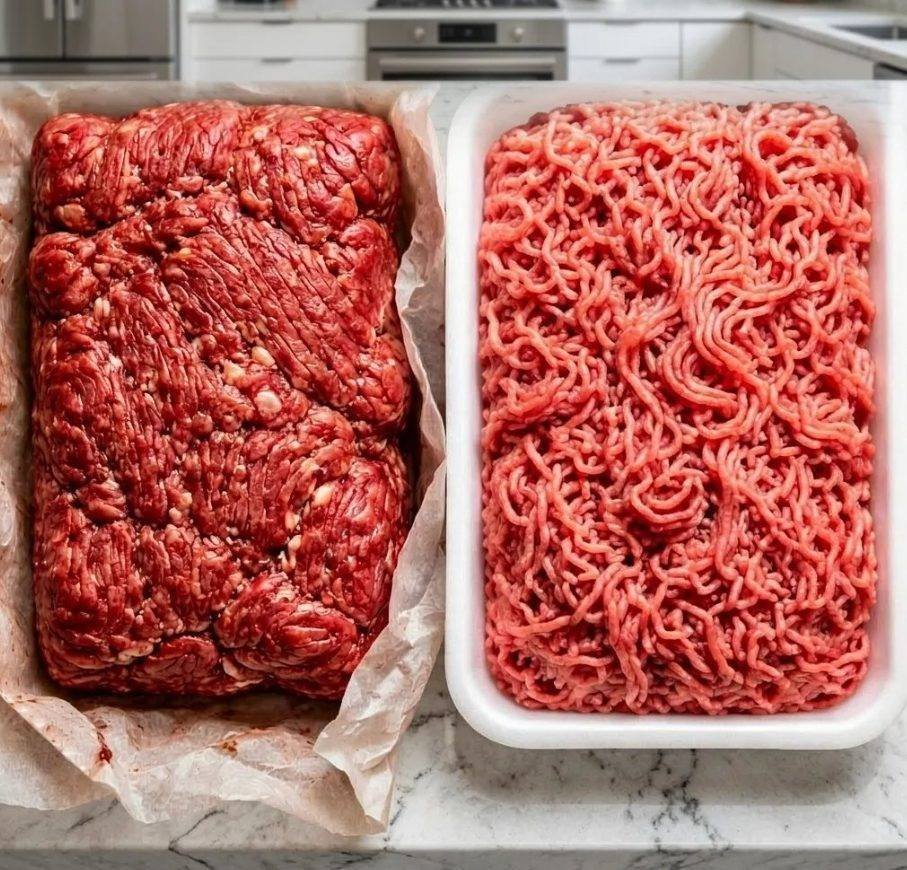
At first glance, the contrast between the two portions is striking.
The beef on the left is coarsely ground, with visible muscle fibers and irregular chunks of fat scattered throughout. It has a freshly ground, almost rustic appearance—the kind you might get from a local butcher who grinds meat in small batches. This minimal processing preserves the meat’s natural structure, which means it retains more moisture and delivers a richer, more robust flavor when cooked.
The beef on the right, by contrast, is finely ground into a smooth, uniform paste. The strands are thin and consistent, tightly packed together. This is typical of industrially processed ground beef, where meat passes through fine grinding plates multiple times. The result is a standardized product that looks neat and packages easily, but the texture is softer and less distinct when cooked.
Texture Matters in the Kitchen
These differences aren’t just visual—they直接影响 how the beef performs in your favorite dishes.
Coarsely ground beef is ideal for recipes where structure and juiciness matter most. Think burgers, meatballs, or stuffed peppers. The larger grind holds together well while still allowing tiny air pockets to form, which trap moisture and fat during cooking. This gives you a juicy, satisfying bite with every mouthful.
Finely ground beef, on the other hand, excels in dishes where the meat needs to blend seamlessly with other ingredients. It’s perfect for Bolognese sauce, chili, or shepherd’s pie, where a softer, more integrated texture creates a harmonious final dish. The meat practically melts into the sauce, adding richness without dominating the texture.
Fat Distribution and Flavor
How fat is distributed through the meat also changes with the grind.
In coarsely ground beef, fat appears in visible chunks that melt slowly as the meat cooks. This gradual rendering bathes the meat in flavor and helps keep it moist. In finely ground beef, the fat is evenly dispersed throughout, which can lead to quicker rendering and a more uniform taste—but sometimes at the cost of those concentrated bursts of richness you get from a coarser grind.
Depending on your recipe, one approach may serve you better than the other.
Freshness and Processing
Processing methods affect more than just texture—they also influence safety, shelf life, and flavor.
Freshly ground beef from a butcher or farm is typically handled in small batches and sold quickly. It has a shorter shelf life but offers a clean, natural taste that reflects the quality of the meat. Because it hasn’t been sitting in packaging for days or weeks, the flavor is often brighter and more pronounced.
Pre-packaged supermarket ground beef, while convenient, may undergo treatments to extend its shelf life. Modified atmosphere packaging or other preservation methods can sometimes dull the flavor or alter the texture. It’s worth knowing where your meat comes from and how it’s been handled before it reaches your kitchen.
Choosing the Right Beef for Your Meal
see continuation on the next page