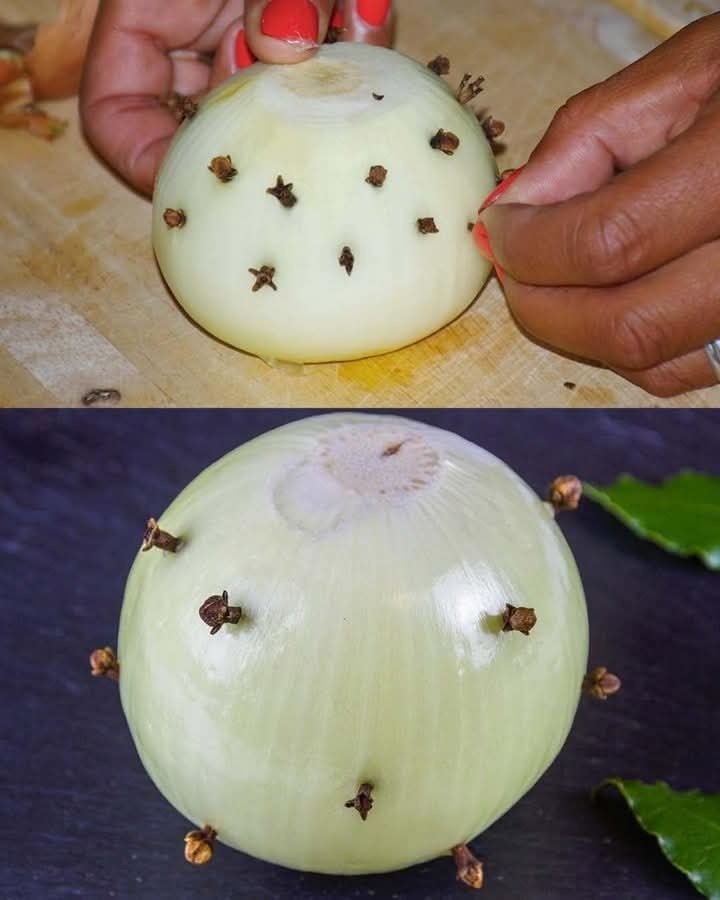
Some kitchen traditions look almost ceremonial. A peeled onion, a handful of whole cloves, and a steady hand pressing each bud into the onion’s surface. It may appear decorative or even unnecessary at first glance. Yet this humble technique—known in classic French cooking as oignon piqué—is one of the simplest ways to build deep, balanced flavor in soups, stews, sauces, and braised dishes.
When my grandmother prepared broths or slow-cooked meals, she never skipped this step. She believed good cooking was not about complicated ingredients but about understanding how flavors unfold over time. The clove-studded onion was her quiet secret: subtle, fragrant, and transformative.
The Magic of a Clove-Studded Onion
Whole cloves are the dried flower buds of the clove tree. They are intensely aromatic, slightly sweet, and warmly spiced. Because they are potent, using them correctly is essential. If tossed loosely into a dish, they can overpower other flavors or be difficult to remove later.
By pressing whole cloves into an onion, you create a natural infusion tool. The onion acts as a flavor diffuser, slowly releasing the cloves’ essential oils into the cooking liquid. The result is warmth and complexity without sharpness or bitterness.
The technique is especially common in traditional French cuisine. It is often used in béchamel sauce, pot-au-feu, and delicate broths, where subtle background flavor matters more than bold spice.
How It Works
The method is simple but purposeful:
Peel a medium yellow or white onion.
Press 5 to 6 whole cloves firmly into the onion’s surface.
Add the studded onion to your simmering liquid or braising pot.
Allow it to cook gently, releasing aroma and flavor over time.
Remove the onion before serving.
Because the cloves remain anchored in the onion, they are easy to remove at the end of cooking. No fishing around the pot for stray spice buds.
The onion softens as it cooks, adding its own mild sweetness to the dish while tempering the intensity of the cloves. This controlled infusion ensures balance.
Flavor Profile and Culinary Science
Cloves contain eugenol, a natural compound responsible for their warm, slightly sweet, and mildly peppery flavor. Eugenol is fat-soluble and heat-activated, which means it releases gradually during simmering.
When combined with onion—rich in natural sugars and sulfur compounds—the result is layered depth:
The onion adds sweetness and body.
The cloves add warmth and aromatic lift.
Slow cooking blends both into the base of the dish.
Instead of tasting clove directly, you notice a subtle roundness and complexity. Many people cannot identify the flavor outright, but they recognize that something tastes fuller and more refined.
Ways to Use a Clove-Studded Onion
1. Broths and Soups
A clove-studded onion is ideal for clear broths and stocks. Add it alongside carrots, celery, bay leaves, and peppercorns. It works beautifully in chicken soup, vegetable broth, or classic French consommé.
In creamy soups such as potato or cauliflower, it provides gentle warmth without competing with delicate ingredients.
2. Braised Meats
Slow braises benefit enormously from layered aromatics. Add the studded onion to dishes like:
Beef bourguignon
Pot-au-feu
Coq au vin
Braised lamb shanks
The long cooking time allows the clove’s warmth to integrate fully into the sauce.
3. Sauces
Traditional béchamel often includes an onion studded with cloves and simmered in milk before the sauce is prepared. The milk absorbs the aromatic flavor, which then carries into the finished sauce.
This technique is excellent for:
Cream sauces
Cheese sauces
White gravies
Mornay sauce
4. Roasted Dishes
Place the studded onion in a roasting pan with chicken, pork, or lamb. As the meat cooks, the onion releases fragrant steam that perfumes the dish and pan juices.
5. Grains and Legumes
continued on next page